
OVERVIEW
One of the main responsibilities of a Stuttering Support Group Leader is to facilitate conversation at our meetings. Having a meeting topic helps to make for a more engaging and effective meeting.
The following are Meeting Topics that have recently been used with my stuttering support group in Greenville, SC. You may find these helpful with the group you lead.
My stuttering support group is connected with the National Stuttering Association.
MEETING TOPICS LIST
Click the links below…
First Meeting of the Year

The first meeting of the year is always a good time for attendees to reflect upon the prior year and look towards the new year. This meeting topic will get attendees thinking and sharing and should spark interesting group conversation.
Start the meeting by letting attendees know you will be asking questions for people share their thoughts and experiences about the year that just ended and for the year that just started. Attendees will be sharing their SUCCESSES, REGRETS, LEARNINGS from the prior year and sharing their HOPES for the year ahead.
SUCCESSES
Have each person share with the group at least one SUCCESS
they experienced in the past year.
Question prompt: “What is at least one success you experienced in the past year?”
REGRETS
Next, have each attendee share at least one REGRET
they have from the prior year.
Question prompt: “What is at least one regret you experienced in the past year?”
LEARNINGS
Then, have each attendee share a key
LEARNING from last year that has influenced them.
Question prompt: “What is a key learning from the past year that has influenced you?”
HOPES
Close the meeting by having each person share something they
HOPE will happen in the current year.
Question prompt: “What is something you hope will happen this year?”
NOTES:
Ask each person follow-up questions and allow for group conversation following each time someone shares their thoughts. If you are holding an in-person meeting, consider giving attendees a pen and notecards to write down their thoughts before sharing with the group.
My Three Words

This is a personal reflection activity for attendees to do quietly and then share broadly with the group. Introduce the activity by telling attendees they will be thinking about how they want to live with more intentionality for the next 12 months. (Pass out notecards and pens to attendees if this is an in-person meeting.)
Have people write down 3 WORDS they believe will help guide how they live, speak, and act throughout the year. Explain how these three words are to help guide and focus the decisions they will be making. (For example, someone could write down these three words: PATIENCE, COURAGE, and PLAY.)
After everyone has written down their three words, have each person share their three words with the group. When sharing, attendees should explain why they chose each word.
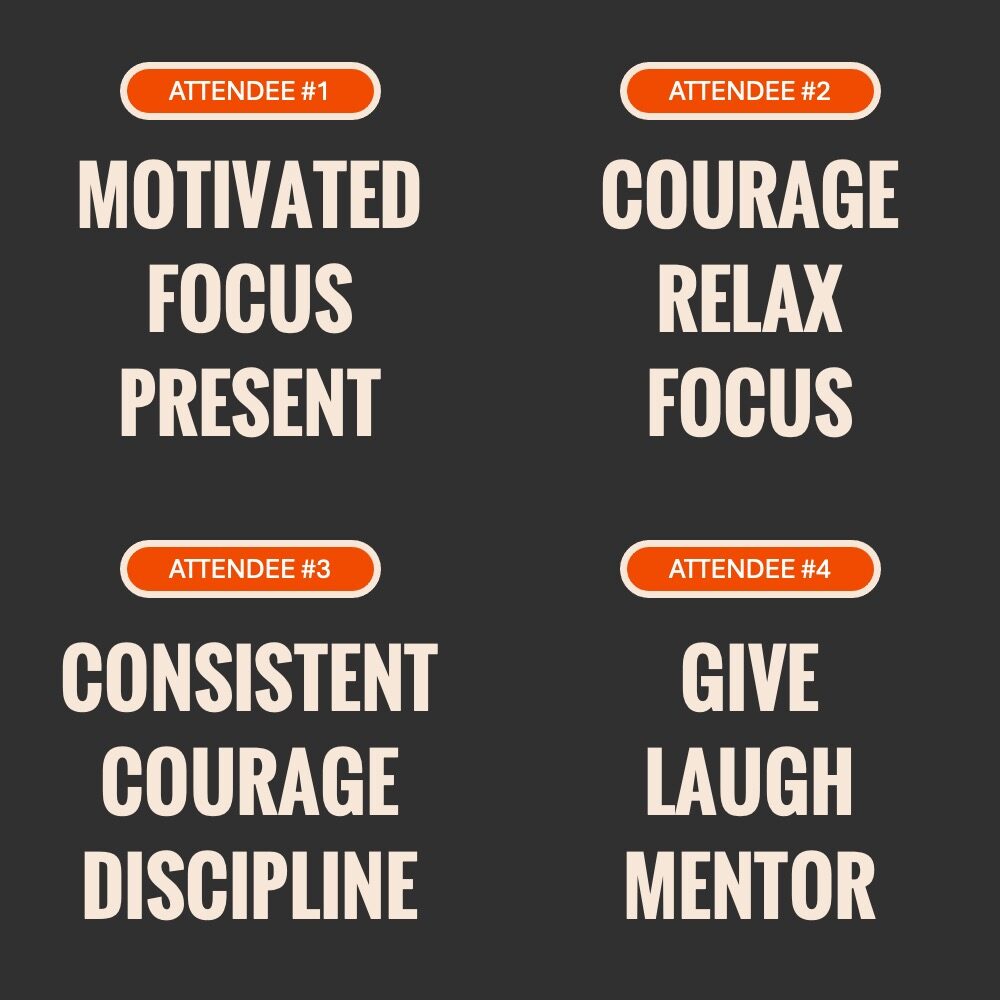
For the stuttering support group I lead, these were the words attendees chose.
NOTES:
Ask each person follow-up questions and allow for group conversation following each time someone shares their three words.
Challenging Speaking Situations

For people who stutter, some speaking situations are more challenging to confront while other situations are super easy to do. This meeting topic will get attendees relating to each other based upon how their emotions impact their stuttering in different speaking situations.
Introduce the meeting topic and let attendees know you will be sharing a variety of speaking situations. For each situation, attendees will use a scale from 1 to 5 to reflect how challenging they find that speaking situation. Showing 1 finger conveys NOT CHALLENGING and showing 5 fingers means VERY CHALLENGING.
Speaking Situations
- Introducing Yourself to New People
- Asking for Help
- Giving a Toast
- Apologizing for a Mistake in a Group/Public Setting
- Expressing Romantic Feelings
- Ending a Romantic Relationship
- Arguing with Someone
- Delivering Bad News
- Speaking Up in Meetings/Classroom
- Speaking to Authority Figures (bosses, professors, etc.)
- Being Interviewed on the TV or Radio
- Job Interviews
- Public Speaking / Giving Presentations
- First Dates
- Calling Your Credit Card Company
NOTES:
Ask the group follow-up questions and allow for group conversation following each vote on the speaking situation. You do not need to use all of the speaking situation prompts. Choose the situations that will work best for your group.
Music Trivia
Stuttering has played roles in popular songs going back decades. This MUSIC TRIVIA meeting topic will highlight a few songs that include stuttering and singers who stutter.
Start the activity by telling attendees that they will be asked a total of seven Music Trivia questions. Each question will include a song soundbite followed by a question. (As group leader, you will need to use your phone or laptop to stream the video link below.)
The first six questions are worth 5 points each. (Meeting attendees will need to keep their own score.) Following each song snippet, tally scores and then discuss how the band/artist is connected to stuttering.
For the final question (#7), attendees will total their score and then decide how many points to risk (all, none or some of their points).
NOTES:
You will need to pause the video following each song soundbite to allow for people to tally scores. You should also encourage conversation between questions. While some people will not know the band/artist/song, everyone should find the connection to stuttering very interesting.
Never Have I Ever
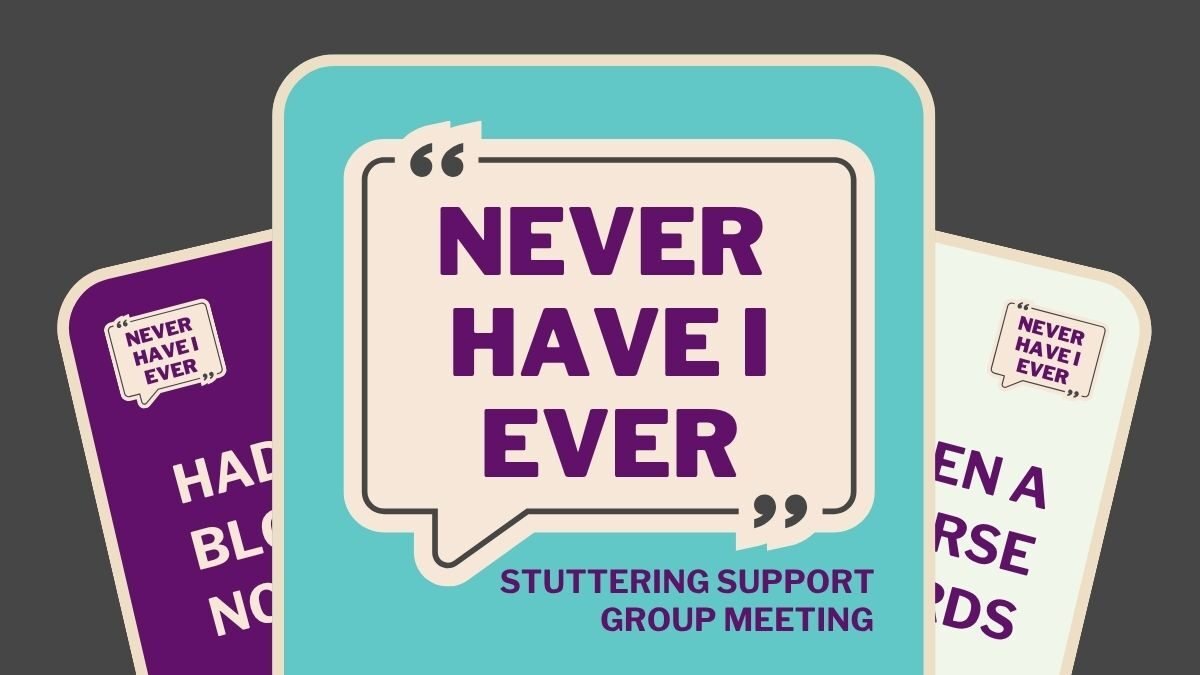
The NEVER HAVE I EVER group activity is a surefire way to spark fun and meaningful conversation. There are many ways this game is played. We’ve designed this way to work best for a stuttering support group meeting topic. Included in this direction are sample questions to use with your group.
Gather the group together in a circle. Place a bowl of Starbursts in the middle of the group. Place two small decks of NEVER HAVE I EVER question cards in the middle. One stack has EVERYDAY (family-friendly) questions and the other stack has STUTTERING-related questions.
The person with the closest upcoming birthday to your meeting date starts by picking a question from either deck. This person reads the question out loud. For example, suppose this STUTTERING-related question is selected: “ Never have I ever worried that people judged my intelligence based on my speech.”
If anyone in the group has felt that way (or done that activity), they take one Starburst. Encourage conversation with the group after every question is answered.
Continue the game play in a clockwise manner. The game ends after everyone has drawn cards at least twice. You can also play the game to a set time. And yes… people get to keep their Starbursts!!!
STUTTERING
QUESTIONS

EVERYDAY
QUESTIONS

CLICK HERE to download a list of the STUTTERING and EVERYDAY questions.
NOTES:
To create small decks of cards, type the questions into a document, print on thicker paper and cut into cards. (An Avery label template will make this process easier and more elegant.) You can also simply print the questions, cut into slivers and place the slivers face down for people to draw questions from. There are many creative ways to have group attendees select questions. The key is to have a set of questions to spark conversation.
Scatman & Gina, Jesse and KC

It’s uncommon for stuttering to be seen and discussed in popular culture. In early 2026, there were three instances where stuttering was talked about openly. This meeting topic highlights a 1990s pop star, a future music star and a soon-to-be NFL stud wide receiver.
Start the meeting by telling attendees they will be watching a video (17 mins long) about three current stories where stuttering has impacted people personally and has became a public conversation. (As group leader, you will need to use your phone or laptop to stream the video link shown below.)
The first video is about Scatman John, an unlikely international pop star from 1995, and his life-changing relationship with Gina Waggot. In 2026, Gina published the biography of Scatman John. It’s a story that will spark conversation with your group.
The second video shares the story of Jesse Findling, a contestant on American Idol. Jesse’s stuttering story will be relatable to your group. He is bringing awareness to stuttering on one of the most watch television shows.
The third video is about
KC Concepcion, a potential first round pick in the 2026 NFL Draft. After he auditioned for NFL scouts, KC answered questions from reporters. KC stutters. Unfortunately, some social media haters mocked and ridiculed KC for his stutter.

You will need to click the play button in the above image. The video will play on YouTube.
NOTES:
There are prompts for you to pause the video following each story. Encourage group discussion by asking attendees to share their thoughts. At the end of the video, facilitate conversation that has your attendees discussing how these stories are relatable to their life as a person who stutter.
Serious or Silly Questions

If you find it difficult to kickstart group conversations then this meeting topic will help. You can use this as either a meeting introduction icebreaker or as the meeting topic. Conversation is bound to flow naturally with this SERIOUS or SILLY meeting activity.
The list of SERIOUS questions will have people sharing something personally reflective. On the other end, the
list of SILLY questions will have attendees sharing something fun about themselves. Both will spark good, free-flowing meeting conversation.
NOTES:
For in-person meetings, have attendees draw their own question from the SERIOUS or SILLY stack and let the conversation flow. (You can go through multiple rounds depending upon the size of your meeting.)
For online meetings, ask the attendee if they want a SERIOUS or SILLY question and share the question aloud for everyone to hear. (Go through as many rounds as time allows for the size of your group meeting.)
On-The-Spot Speaking
Many people who stutter find on-the-spot speaking challenging. These situations happen in the classroom, at work during a meeting/conference call, and throughout our everyday life. This meeting topic will give attendees a pressure-free space to practice impromptu speaking through a fun PRO/CON Debate activity.
Start with two volunteers. Explain that they will need to take a side on a topic and explain why their opinion is “right.” Give them a topic from the list below.
(The debate topics are purposely silly to make this a more fun activity. Speakers should try not to ramble. You can give the speakers opportunity to make rebuttals.)
- Does pineapple belong on a pizza?
- Is a hot dog a sandwich?
- Should you make your bed every day?
- Would you rather have the ability to fly or turn invisible?
- Is cheesecake a cake or a pie?
- Does a straw have one hole or two holes?
- Would cats be polite or rude if they had thje ability to talk?
- Is it possible to high-five yourself and call it a team effort?
- Should you eat mac and cheese with a spoon or a fork?
- Are phones making us smarter or dumber?
NOTES:
Allow for group conversation following each PRO/CON debate. Expect lots of laughter. But also expect attendees to quickly realize how such a silly activity is a serious exercise that we can apply to our lives of living in the moment.
Memoir Today.
Memoir Tomorrow.

We’ve all read memoirs and autobiographies of interesting people. This meeting topic will get attendees to think reflectively and creatively about writing the book title for THEIR memoir. Attendees will leave the meeting with lots to think about with their stutter journey.
Introduce the meeting topic as an opportunity for attendees to think about the life they have lived up to present day. Ask attendees to share any autobiographies they have read and enjoyed. Next, give each attendee a piece of paper and a pen. From there, have attendees take 5 mins (or so) to think of a memoir title and subtitle for the book they would write today.
Give attendees more direction by explaining a book title should be concise, attention-grabbing, and intriguing. The subtitle should give more information and add more context in an interesting and evocative way.
Once everyone has written down their memoir titles, have them share it with the group. Follow-up questions from you and or the group would be helpful to spark deeper conversation.
If time allows, do a second memoir title activity. Have attendees pretend they’ve lived their perfect life and are now decades older (20+ years). What that memoir title and subtitle would be. Have attendees share their future titles and allow for conversation to follow.
NOTES:
Everyone’s book titles shed light on where their stuttering journey has taken them to present day and how they’ve grown within their stuttering journey. For the group I lead, these are memoir titles from two attendees. You will see notice stark differences in the emotions between the current memoir title and the future title.
Below are memoir titles from my stuttering support group.
Attendee #1
Memoir Today: TRAPPED IN A STUTTER: Light Behind a Stuttering Camera
Memoir Tomorrow: I STUTTER (So What)
Attendee #2
Memoir Today: KEEP MOVING, CHANGE LANES LATER: How I Persevered Through My Life.
Memoir Tomorrow: FRUITS OF LABOR: From Sweating Blood to Sipping Wine
I Desire Their Life

Most of us covet, in some way, how someone else has lived or lives their life. It’s human nature to want to live the life of someone we like, admire, and or respect. This meeting activity will have attendees thinking about the values they appreciate in others and possibly, help attendees to gain a new appreciation for the life they are currently living.
First, pass out to everyone three sheets of paper and a pen. Then, setup the activity by telling attendees they have the power to trade lives with anyone. Get attendees to think about three people they love, like, and or admire enough to live their life.
Have attendees write the names of each person on a different sheet of paper. Next, have attendees write down a few reasons they covet that person. After a few minutes, have people write down a few negative aspects about that person. (Nobody is perfect. Everyone has some negative attributes and characteristics).
As a group, have each person share who they would trade lives with, including the positive reasons and negative reasons they listed.
NOTES:
Allow for group conversation following each time someone shares. Comparing each attendee’s responses will be interesting and spark meaningful group conversation.
Lasting Memories

Every person who stutters has experienced lasting memories related to their stutter. Some of those memories could sting negatively to core. Some could sing positively to the heart. Feelings of shame, guilt, and embarrassment from awkward stuttering moments are common. Also common are feelings of hope, happiness and celebration.
This stuttering support group meeting topic will encourage attendees to reflect on hurtful moments, happy moments and thankful moments they’ve experienced in living life as a person who stutters.
As the stuttering support group leader, introduce the topic by sharing a lasting memory you’ve experienced that still lingers within you. (By sharing something personal with the group, attendees will start to feel more comfortable sharing their experiences.)
Explain to the group that everyone will have an opportunity to share “Lasting Memories” from different stages in their life. Spark reflections and conversations using the following four prompts.
FIRST
Have attendees think about their earliest memory of stuttering. Ask people to share that memory with the group.
SECOND
Have attendees share a lasting memory of stuttering from their high school and college days.
THIRD
Have attendees share a lasting memory of stuttering from a workplace/career experience.
FOURTH
Have attendees share a lasting memory of stuttering from their adult social life.
NOTES:
Ask follow-up questions and facilitate group conversation following each time someone shares. Close the meeting by encouraging attendees to share memorable moments from the group conversation.
Fast Friends

The Fast Friends activity encourages conversation and connection in a low-pressure, supportive setting. Meeting attendees will be doing five-minute one-on-one interviews with each other. The goal of the meeting is for attendees to learn more about each other and to get more comfortable talking.
Arrange chairs in a room so that attendees will be able to speak face-to-face with each other. Have attendees pair up and use your phone to time the conversation at five minutes. After five minutes, have one group of attendees remain seated and the other attendees will rotate one spot. Repeat until every attendee has had the opportunity to speak with each other. (If five minutes is too short a time, then adjust the length of each conversation.)
FUN
- What is a small thing that makes your day better?
- If you could instantly master any skill, what would it be and why?
- What is something on your bucket list?
- What is a movie you can watch again and again?
- What is something that made you smile this week?
- If you could live anywhere for one year, where would it be?
REFLECTIVE
- Tell me about a moment you were really proud of yourself.
- What is a lesson you learned the hard way?
- What is something you wish you tried earlier in life?
- What does confidence mean to you?
- What are you grateful for right now?
- What helps you stay resilient during difficult times?
STUTTERING
- What speaking situation do you still avoid, and why?
- When have you felt the most self-conscious about your stutter?
- What was a turning point in your relationship with your stutter?
- What helps you recover after a difficult speaking moment?
- What would you say to someone who feels embarrassed by their stutter?
- What inner strength have you discovered as a person who stutters?
Download Question Prompts…
NOTES:
It’s smart to print out the Question Prompts and give a copy to each attendee.
After the Fast Friends interviews, bring the group back together and ask people to share their thoughts and feelings about the conversations they had.
If your group is large (7 or more people), you may not be able to have all attendees speak with each other. That’s perfectly fine. The goal of this activity for your group to get to know each other better and to become more comfortable talking in a one-on-one setting.
Improv Fun & Games

It’s common for people who stutter (PWS) to fear speaking situations. It’s also common for PWS to spend silent ‘mind time’ thinking of what words they will say to try and not stutter. Many PWS spend a lot of time thinking before speaking.
Imagine being in a situation where it’s best to say the first thing that comes to your mind. That situation is improv and one of the ground rules in improv is to say words that immediately come to your mind. The other improvisers must play along with whatever is said in the moment. Together, all the improvisers build upon whatever is expressed verbally through speaking and non-verbally through physical actions.
Living in the moment is the beauty of improv. Don’t think, just speak. Don’t plan, just act. With improv, you must trust that whatever you say or do will add to the scene. Many PWS have found that developing the skill of “living in the moment” helps them to gain a greater comfort in everyday speaking situations.
NOTES:
Because there is so much information to share about the Improv Fun & Games meeting topic, click the above button to access the agenda and videos.
Stuttering & Disclosure on Survivor 48

Survivor 48 (aired spring 2025) was monumental in raising awareness of stuttering and in providing PWS a role model. Mitch Guerra competed on Survivor 48 and openly stuttered. Eva Erickson also competed on Survivor 48 and she’s on the autism spectrum. This meeting will show video clips from Survivor that will spark meaningful discussion. (Video clip is below.)
Start the activity by telling meeting attendees you will be playing video clips from Survivor 48 that showcase two disclosure methods. Mitch discloses his stutter in a different way than Eva does in telling the other castaways she’s autistic.
There are moments to pause the 14-min long video and get thoughts from attendees. Conversation should flow naturally without much prodding. The final video segment is very powerful and emotional.
Click below to watch the video…

(Most of this video was recorded from my television set and was uploaded to Google drive to avoid any YouTube copyright infringements.)
NOTES:
Allow for group conversation following each time you pause the video. Your group will find there is LOTS to talk about with this emotional and personal video.
What Speaks to You?
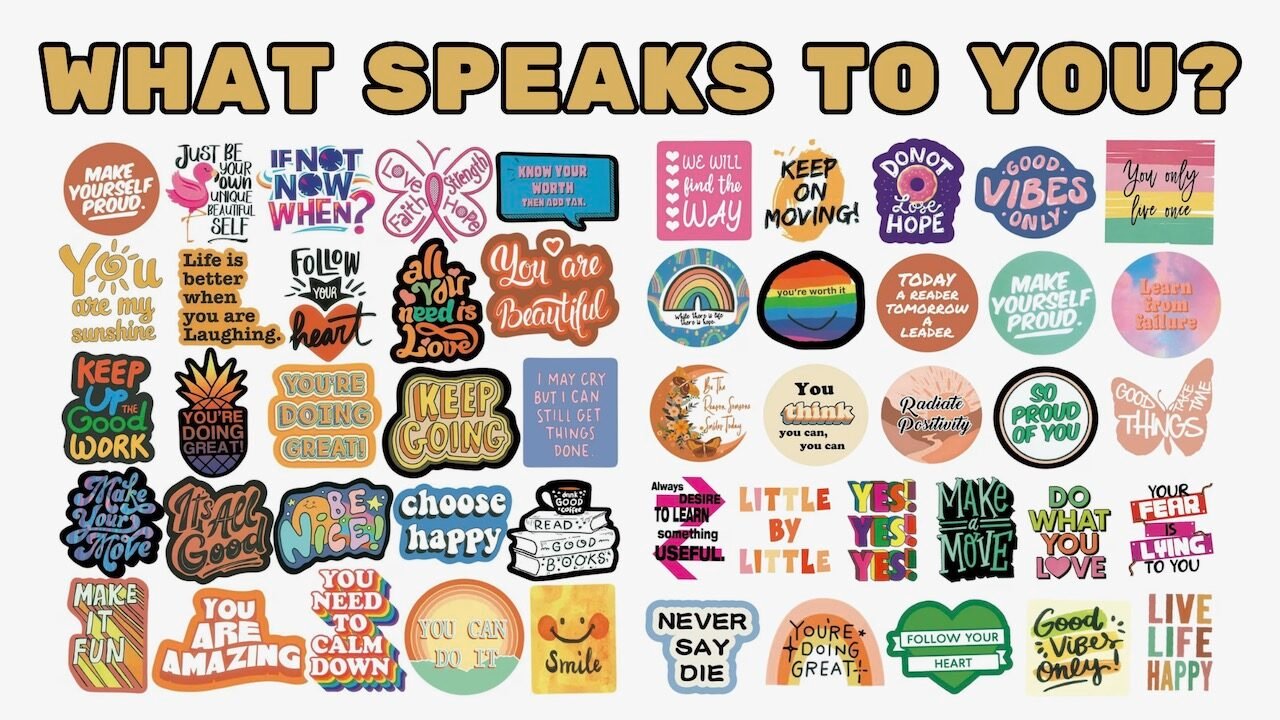
The following group activity is designed to encourage natural conversation, while also learning where meeting attendees are mentally and emotionally. (You will need to purchase special stickers for this activity. Scroll below for a link to purchase.)
After meeting introductions and initial group conversation, spread out these stickers with motivating, funny and reflective sayings on a table. Have attendees choose 3 to 4 stickers that speak to them. Go around the room and have people share what they picked and why.
This simple activity will help you and the group gain valuable insights as to how someone is feeling and if they’re going through something. As the group leader, look and listen to how people respond and ask follow-up questions.
Close the meeting by encouraging attendees to share memorable moments from the group conversation.
BULK STICKERS
(300 pieces, $10) — Amazon
NOTES:
This meeting topic can also be used as an icebreaker activity. Attendees will leave with the stickers they selected.
What It’s Like to Stutter

John Hendrickson is a journalist and author of “My Life on Delay: Making Peace with a Stutter.” He’s become a well-known stuttering advocate. In 2022, John worked with filmmaker James Robinson on a video opinion piece that was shared by the NY Times.
Start the meeting by telling attendees they will be watching a thought-provoking 9-minute video about stuttering. Explain that the video shows how people stutter, the things people do to avoid stuttering, how society views people who stutter, and why society should wait for people who stutter to talk.
Play the following video…
Initiate group conversation by asking the following questions:
- What moment in the video stood out to you most, and why?
- Was there anything John said that you’ve felt but never put into words?
- Did anything in the video surprise you or feel different from your own experience?
- What listener reactions do you find hardest to deal with: finishing your sentences, looking away, saying “slow down” or “take a breath,” something else?
- How do you feel about disclosing your stutter in a conversation with someone?
- How much does the anticipation of saying words you know you will stutter on impact your speech?
- What would “making peace with your stutter” look like for you? Does that phrase fit, or would you describe your goal differently?
NOTES:
At the end of the video, facilitate conversation using the question prompts. Be prepared to ask attendees follow-up questions that can draw connections between perspectives.